Featured Work
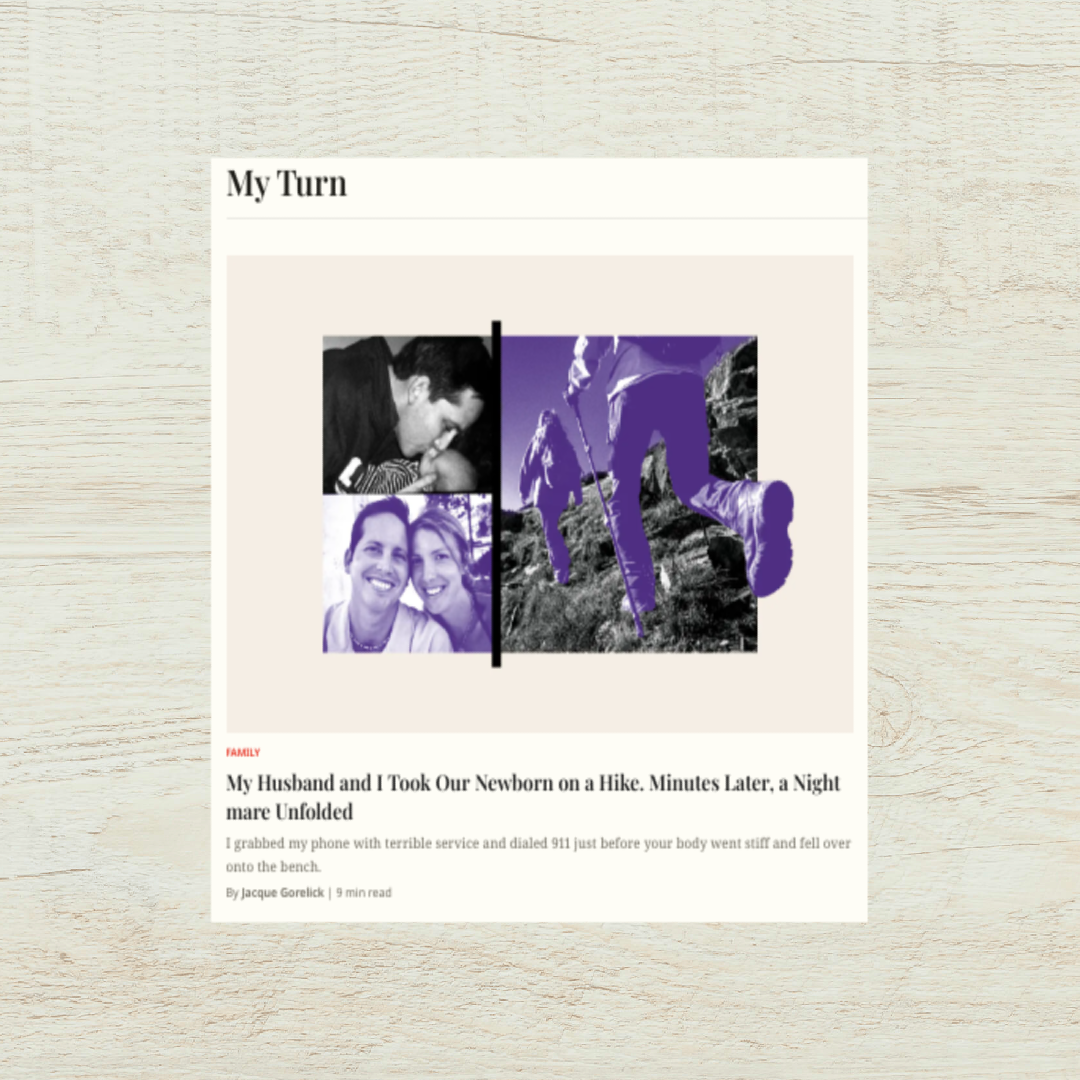
Excerpt in Newsweek from my memoir Map of a Heart about how an ordinary day can turn into a medical disaster.
“Your body was so heavy and rigid, it was hard to keep you from falling off the bench. I waited for the call to go through. I screamed into the surrounding woods in case the cell towers failed us.
Finally, “911. What’s the emergency?””
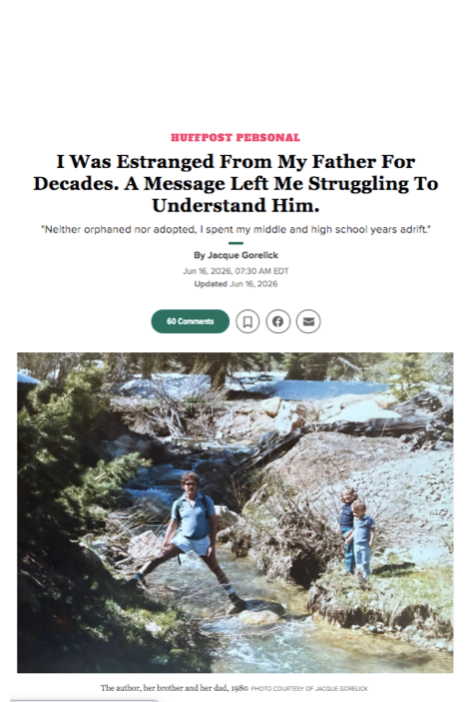
Essay in HuffPost about estrangement and complicated loss.
“When we were kids, my younger brother and I were inseparable, and people called me Daddy’s girl. For a sliver of my life, my father was my whole world.”
Essay in Electric Lit about the ripple effects of early mother loss.
“I yearned for stories from daughters like me—who’d spent years sifting through memories trying to piece together a woman they hardly knew.”
Essay for The Kenyon Review about the complexities of the human heart and the stories our bodies tell.
“The mother-child bond is more than metaphorical. As early as the second week of pregnancy, cells and DNA flow back and forth between mother and baby through the placenta. ”

Essay for X-R-A-Y Literary about people and places that shape our lives, the search for belonging, and shame.
“In this life, I knew I shouldn’t want for anything else, but in my body lived the truth about who I was and where I came from. In my body I was still a motherless daughter, a fatherless child, a stray.”
CNF flash for HAD about heredity, fear, and hope.
“I mean to be flip in an, I’m made of scar tissue and indifference way. But instead, I snort-cry, and tears roll down my cheeks, dripping along my jawline (maxilla), following the creases of my ears, pooling on the thin waxy paper beneath my head.”
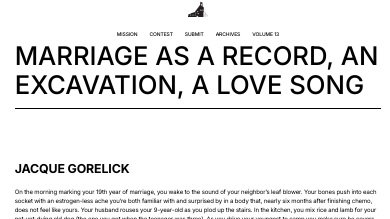
Essay for Pithead Chapel about the ebb and flow of womanhood, motherhood, and building a life with someone.
“The band plays songs that transport you to another time and place—before mortgages, careers, kids, dogs. Before marriage. They sing about misunderstood Maria and black-winged birds, and you are twenty-five, driving your stick-shift convertible down San Francisco streets...”

Essay for Los Angeles Review of Books about what we inherit, the toll of pandemic mothering, estrangement, and holidays as place holders for memories.
“After the biopsy, I came home, sat on the deck overlooking the creek behind our house, and howled into the trees for this not to end me. Please not like my mother. Guttural and pleading, I begged the universe for more of everything and nothing at the same time. ”
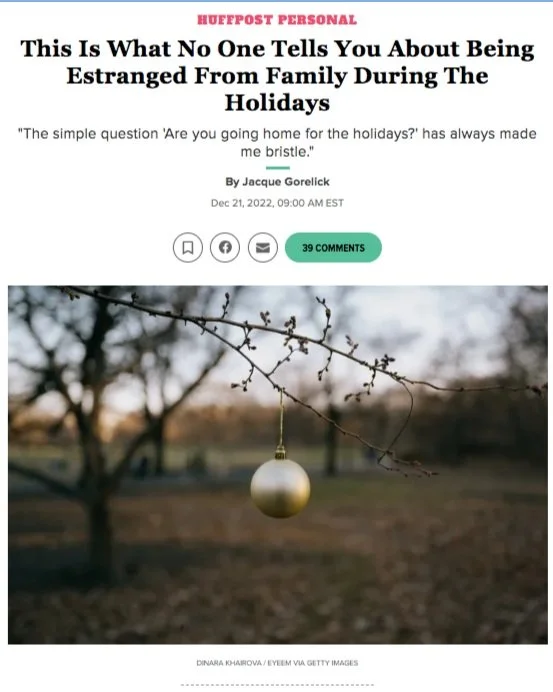
Essay for HuffPost Personal about family estrangement, holidays, and found family.
“The simple question “Are you going home for the holidays?” has always made me bristle. It used to reopen old wounds, but as time passed, the bonds I’ve found in friendship, marriage, and motherhood have helped me heal.”

Essay for HuffPost Personal about my husband’s sudden cardiac arrest and what to do as a bystander. (Spoiler Alert: Don’t be like Carrie on Sex and the City—Call 911)
“When he fell over onto the bench, it was nearly impossible to remain calm enough to take action. Should I check his pulse? Attempt to move his body to the ground? Perform CPR? But through my fear and shock, one thing remained undoubtedly clear: I needed to call 911.”

Essay for Salon about my nomadic childhood, the father I haven't seen in thirty years, and making sense of it through the lens of the movie Nomadland.
“I’m not certain my dad fits the movie’s definition of a nomad, but for as long as I can remember, he liked to keep moving. I prefer to think his constant relocating was due to circumstances rather than choice. But the moving was part of him, and for a long time, it was part of me.”

Essay for The New York Times about finding comfort in manageable tasks—like solving puzzles—in uncertain times.
“Everywhere I turn are reminders of life’s tenuous nature: blood pressure machines, orange cylinders of medication, genetic testing, ultrasounds and EKGs of my children’s hearts. These pieces demand my attention; everything else I toss into a pile for later.”
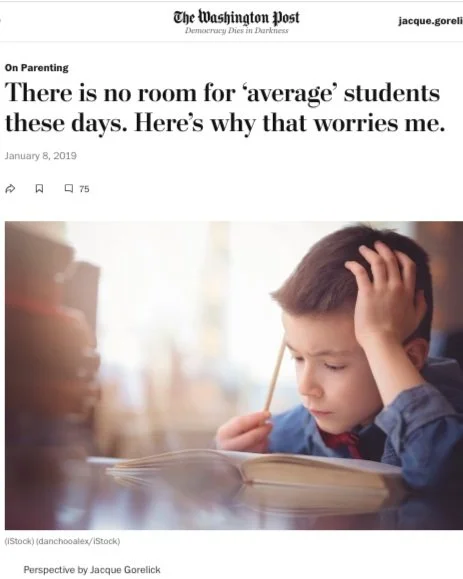
Essay for The Washington Post about parenting in the time of academic expectations.
“What has existed until now as an implied tenet, is becoming a tangible reality: Be exceptional, or be a failure; there is no middle ground.”

-
I am from vinyl records and library books, from pink Capezio ballet shoes and midnight blue Wrangler jeans.
I’m from the A-frame nestled beneath evergreens, roadside blackberry bushes, swimming holes, and sun-ripened cherry tomatoes.
I’m from sawhorses and woodpiles, 2x4s stretched across creeks sitting side by side with my little brother, toes dipped as we captured fire-bellied salamanders and let them go—losing count.
I’m from skinned knees that scab and heal and break open again on playground tanbark and long wobbly skids of bike tires on two-lane country roads.
I’m from bedtime-story-flashlight-forts with Gandalf, Charlie Bucket, and Nancy Drew. From I spy, and cloudspotting, and hold your breath in tunnels.
I’m from late-night hospital phone calls and after-school bad news. From “She’ll always be with you,” and “You have her eyes,” From “You can call me Mom if you want to.”
I am from marriage and divorce. Marriage, and divorce. Names changed and “It’s hard to explain,” and “Where are you from anyway?”
I’m from the wood-paneled station wagon with the open Budweiser and the empty gas tank.
From roadside motels, KOAs, and bills rolled inside the pocket of my dad’s carpenter jeans, on his way to “see about staying another week.”
I’m from night driving and The Man in the Moon, acoustic guitar and Here Comes the Sun, campfire embers dancing into darkness.
I’m from leaving and being left, from KIT, BFF, and PS on the faint blue lines of folded notebook paper.
I am from a jigsaw puzzle of faded Kodak 3x5s. Piece them together, find what’s true. Write it down to make it mine.
A conversation with Alyson Shelton inspired by Where I’m From by George Ella Lyon about about being from families that don't fit into neat definitions and how it's possible to make shame-free space for that in our adult lives.
“I am from vinyl records and library books,
from pink Capezio ballet shoes and midnight blue Wrangler jeans.
I’m from the A-frame nestled beneath evergreens, roadside blackberry bushes, swimming holes, and sun-ripened cherry tomatoes.”
On Health



On Parenting